Tuesday, 1 September 2015

Exploring Odisha: The Diamond Triangle

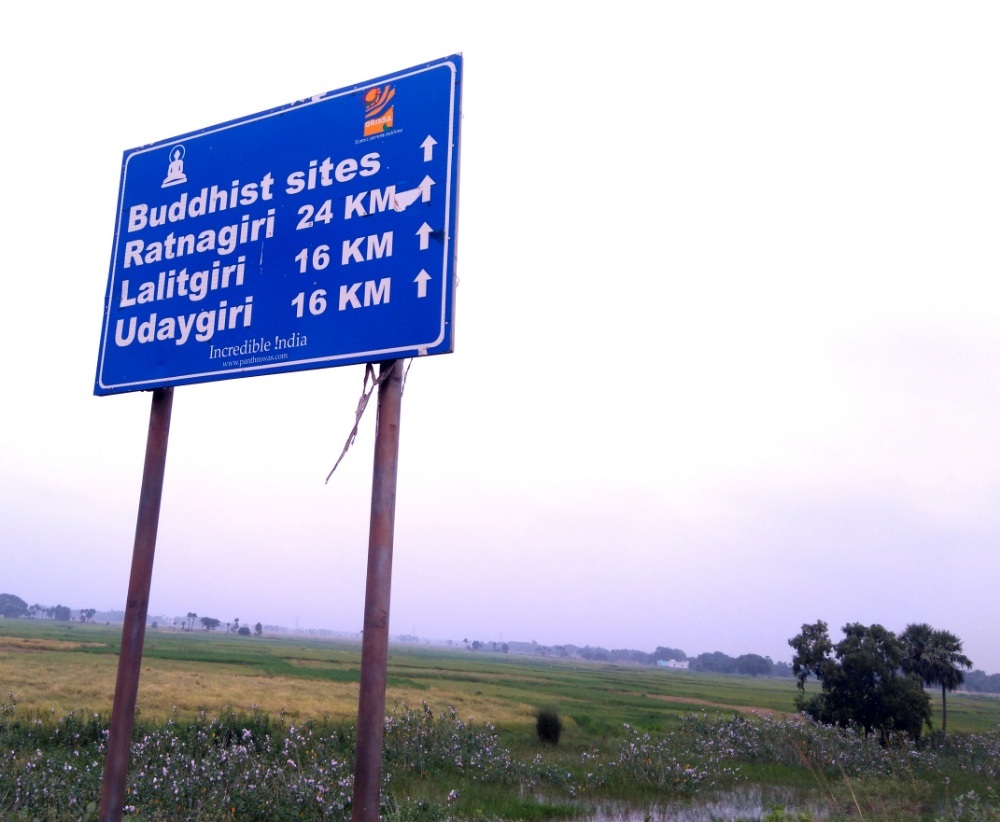
Located about 100 km North – East of Bhubaneswar, in Jajpur District, there are three places collectively called the Diamond Triangle. Ratnagiri,Udayagiri andLalitagiri showcase Odisha’s Buddhist past.

During his visit to India in 639 AD, Chinese traveller Xuanzang  had mentioned about the place  as “Pusi-po-kili”, situated somewhere in Wu-cha (Modern day Odisha ). It was a Buddhist centre of learning and believed to be at par with their famed counterparts of Nalanda&Taxila.


These places were once being regarded as one of the biggest Buddhist places in India, but sadly these are also the least promoted ones.


RatnaGiri:


                It is situated at the hill top, and provides a panoramic view of the surrounding landscape. Among the excavated sites, there exist 2 large monasteries, One MahaStupa and many old rock Stupas.  


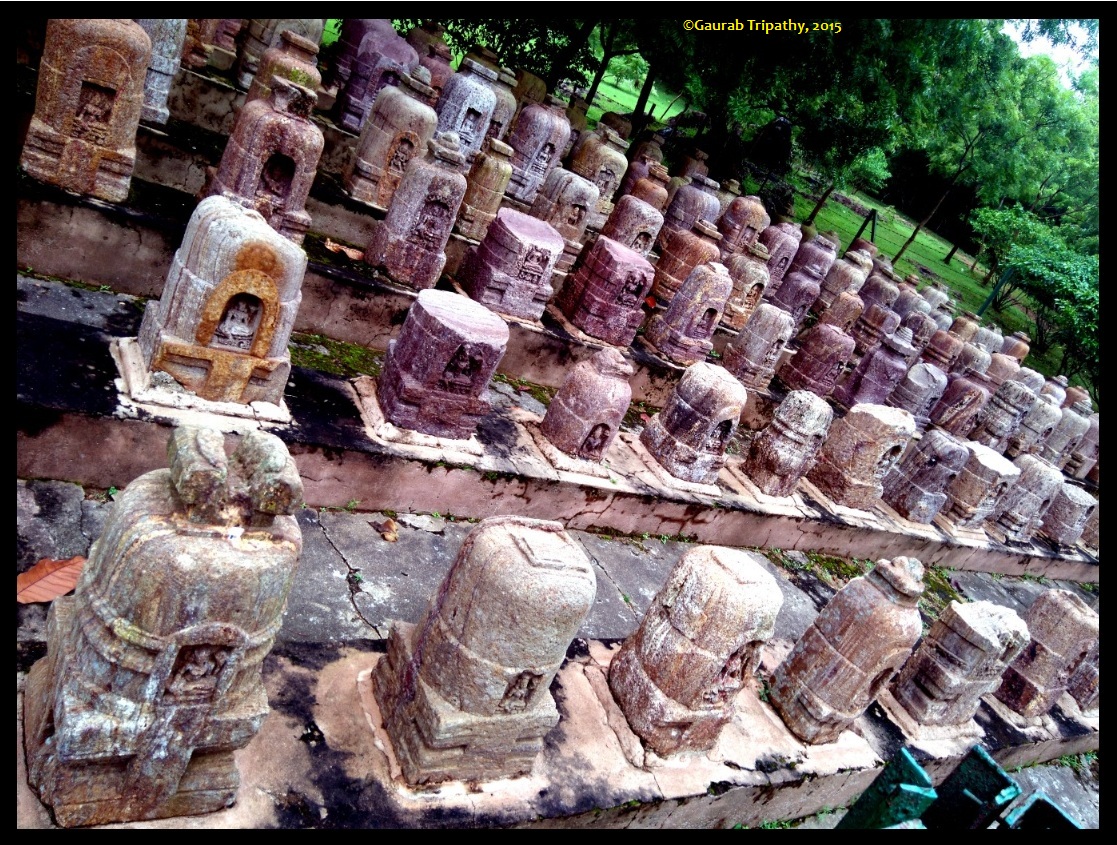
The first thing you will notice while climbing the top is large collection of small votive stupas. (8th - 11th Century A.D.)

[votivestupas, 8th - 11th Century A.D.]


The large courtyard is filled with excavated rocks which include small and large motifs, many small stupas and statues.


The larger Monastery ( 8th - 11th Century A.D.) is eye-catching with a captivating rock door frame. Entering into the monastery, you will find a large courtyard.


[Monastery -1, 8th - 11th Century A.D.]


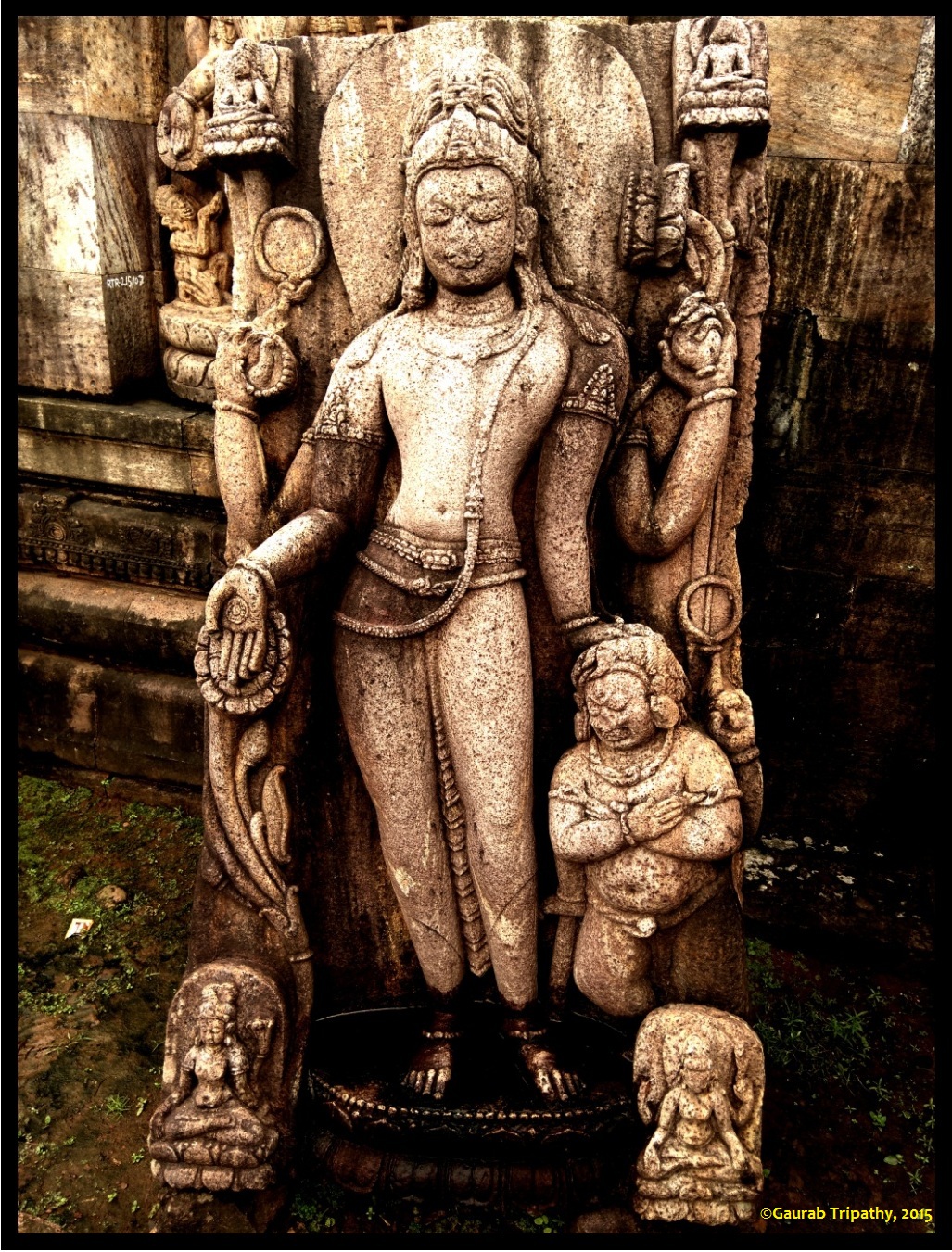
At the end, there is an inner sanctum which holds 3 statues. There is a large statue of Buddha, with his bhumisparsha position along with two smaller statues of Padmapani and Vajrapani on either side.


The second Monastery ( 8th - 10th Century A.D.) is a little smaller and lies next to the main monastery. Its inner sanctum holds one small statue of Buddha in standing position.

The highest point of the site is filled with many small and large stupas (some are arranged in circles) , but the Mahastupa (Giant Stupa) ( 8th - 10th Century A.D.), is the one to look out for. Made from red bricks, the structure still speaks the extravagance of the place at that time.


[MahaStupa, 8th - 10th Century A.D.]

There is also a museum containing several artifacts recovered from the excavation.

UdayaGiri:

                It is the least excavated of all. Walking uphill, you will come across many big statues of Buddha in different positions.
There is also a rock-cut stepped well (9th - 11th Century A.D.) which is unique in its kind.


LalitGiri:

It is the largest in terms of areas that are excavated. It consists of many monasteries, a large U-shaped Chaityagriha and a Giant Stupa.

[Monastery -1, 8th - 11th Century A.D.]

[Monastery - 3, 4th - 8th Century A.D.]

[Monastery -4, 8th - 11th Century A.D.]


[ChaityaGriha, 1st Century B.C - 7th Century A.D.]


These places were long lost, buried with time. When I saw and imagined their existence, some 1500 years back, it was like time-travel for me. At the end of it, the explorer in me wanted to stay there. I actually wanted to be there when those places were at the peak of their extravagance.


How to Reach:

  •  The places are located at a distance of 100 KMs from Bhubaneswar and well-connected road which are in very good condition.

  •   There are sign boards all along the roads to these places. It would be good if you have GPS. 


Saturday, 29 August 2015

Exploring Odisha: Call of the Hidden Treasures


             This came as a surprise when two of my colleagues asked me to join them on a weekend ( 2 days and 2 nights) bike trip, to the districts of Ganjam and Gajapati. It was a great opportunity as I was eagerly waiting for such trip to explore the places which are divine and are mostly unheard of.  

And The journey Begins...


Day 1:


Nirmaljhar:

           We started early in the morning (6 AM) . The one-way broad highway road from Bhubaneswar to Brahmapur is always a delight for bike driving. After driving almost about 120 km s, we took a detour towards this place called “Nirmaljhar”. Though it was never on the list, but then again, what’s the benefit of being on a bike trip?

             Nirmaljhar (Nirmal = Pure, Jhar = Stream) is a transparent, natural, perennial stream that flows through the Badaghati Mountain of the eastern Ghat. There is a picnic spot near by along with many temples(Jagannath, Vimala, Radhakrishna, Nilakantheswar, Surya Narayan and Ganesh) around it. These temples were built by Balunkeswara Maharaja, the king of khallokote estate in 1700A.D.


It was a quiet place .We  spent some quality time at the temple where my friends took some snaps around the premises.


TaratariniAdi Shakti Pitha:

The prime destination of our trip on Day 1 was TaratariniAdi Shakti Pitha. To reach this you need to take a right turn at about 30 KMs before Brahmapur.  Located on the Kumari hills at the bank of the River Rushikulya in Ganjam District, it is worshiped as the Breast Shrine (SthanaPitha). The road condition was good and the cloudy climate added up to our delight when we drove uphill towards the temple along with eye-catching view of river Rushikulya along our side.
[The Rushikulya River]

Shakti Pithas are holy abode of Shakti which are believed to be the places where the body parts of the corpse of Sati Devi fell, when Shiva carried it and wandered. There are more than 50 Shakti Pithas in India (some are even there in Pakistan and Bangladesh too). Out of these, 4 are "Adi Shakti Pithas"Two of the Adi Shakti Pithas are in Odisha [The other being Maa Bimala( PadaPitha) at Puri, Odisha].


It was much of our luck that the day we reached, there was a strike in Odisha for which, the place was not crowded but the temple was open.


Gopalpur sea beach:

                The journey of the day ended at Brahmapur. We quickly checked in at a hotel in the city and rushed to the Gopalpur sea beach, which is about 15 KMs from the main city. The beach used to be a commercial port once. There is also a lighthouse nearby.We witnessed the magnificent view of the Bay of Bengal and spent the evening there as it marked the end of Day – 1 for us.


Day 2:


Taptapani:

                We got up early and started for our next destination. After 56 Kilometers drive from Brahmapur we came across Taptapani, which is a famous hot sulfur water spring. It is situated at the eastern slope of the eastern ghat.  After a drive about 8 KMs uphill, we reached here. With green trees on both sides of the roads and chirping sounds of the birds that could be clearly heard in that silence, it made the whole drive really worth. We missed the deer park that is maintained by the forest department as we were short of time for that day as one of my friends had spent ample time, taking photographs.


N.B: When we reached there, we found only reliance mobile network working at the top.

Chandragiri/Jirang: [Tibet of Odisha]

                One place for which I was really excited, and in a way the prime reason for which I decided to come on this trip, was “Chandragiri/Jirang”
.
It was a shame that being in Odisha, I came to know about this place 1 year back, when I was not in India and when my brother had done a bike trip here. That day itself I had decided to visit this place whenever I will be back. 
Jirang is a Tibetan refugee colony present at south-western hills of Gajapati district, where immigrants from Tibet have been rehabilitated since their migration in 1963.
I was driving along many small villages, and was exploring the greenery, cattle on the roads, small kids coming out of the schools for mid-day meal, as it was lunch time.
Reaching there was like opening a gift, wrapped in many layers. With each kilometer we travelled we felt the existence of the Tibetan Colony. On our way we found their prayer flags, rocks with messages on them, written in Tibetan language, and the glimpse of the huge Monastery and Stupas visible from a distance. The feeling was something else.


Finally we reached there. I was really amazed by seeing the way they have made the place heaven.  They were given a land by the Govt. and they have converted it into a really beautiful place.  They grow all sorts of vegetables there .We saw monks on the field, with their cattle. It was like suddenly getting into a completely different country after travelling across many small Indian villages. There is a big monastery built where the monks live. 
After spending much time at the Monastery taking photographs, we felt really hungry and realized that we had not planned for our lunch and it seemed hard to get anything to eat. But to our surprise the canteen inside the Monastery was open and they served us with hot veg Chow mein.  They were really humble and welcoming.

It is indeed the Tibet of Odisha.


It was almost the end of our trip and we had to return to Brahmapur the same evening. Still we took another detour to a small river and waterfall nearby at Khasada.


We travelled about 650 KMs (Round trip) to explore these beautiful places. It was the longest road trip I had and will cherish it for life.

How to Reach:
·         Brahmapur is located at a distance of 171 KMs from Bhubaneswar and well connected via NH-5.
·         Gopalpur is at 15 KMs distance from Brahmapur by road.
·         The distance of Taptapani is 56 KMs from the city and for rest of the destinations ahead (Chandragiri/Jirang), it would be good if you have GPS.

Take my suggestion, don’t use the GPS. Ask the people you meet on the road and enjoy the Road trip as it should be.

Friday, 19 June 2015

हमनवाई...


क्यों पलों को समेटे बैठे हो, चलो नए लम्हे बटोर ते हैं।
बीते हुए उन लम्हों की मद्होशी अच्छी नहीं।


वक़्त बहुत तेज बदलता है, तुम और तेज भागना सीखो।
रुके हुए बेवफा वक़्त से दिल्लगी अच्छी नहीं।


गर थक गए, तो रुकना नहीं; कहीं रुके भी, तो मुड़ना नहीं।
रूठे हुए उन आवाज़ों की ख़ामोशी अच्छी नहीं।


कुछ मोड़ तुमसे छूट गये, तो अफ़सोश क्यों करते हो?
रास्तों से प्यार करो, इन से जुदाई अच्छी नहीं।


लोग वक़्त की तरह हैं, बदलना उनकी फितरत है।
अपने दिल की सुनो, दिल से यूँ बेरुखी अच्छी नहीं।


आंशु कि तरह बनो, आँखों में आये तो सब साफ़ दिखाई दे।
अंधो की इस दुनिया में, प्यार की अगवाई अच्छी नहीं।


तुम खुद अपने दोस्त बनो, हमदर्द भी और हमराज़ भी।
ज़मीर से मुर्दा लोगों से हमनवाई अच्छी नहीं।


Friday, 10 April 2015

Meriah

        Year is 1838. I always hated to be in India. It is never the way people used to say it is. After being appointed as one of the members of Madras board of Revenue, it has been hell I have discovered so far. It's neither the work nor the negativity that is growing among the Indians towards us. The hell I am talking about is far more dark and gruesome.


        There is one India which has been rich in its resources and culture. And there is another black face of it, in these core, untouched areas and civilizations, which God knows how old, where lies this unimaginable brutality. Everything I know so far, are only heard of. I am yet to discover it. It has struck me deep inside the heart and I don’t know how I will react when I see these in my own eyes. I don't know who to blame for this. That can be another reason for my hatred and frustration.

        I never discussed these things with Martha. Definitely not, when I get the chance to meet her only for one month in a year. She is still in England and I am here, in a place that is alive on its surface, but rotten in the core.  After losing my only son Pete, in front of my own eyes, I abhor death and at the same time felt the importance of life. Still I was selfish enough to leave Martha alone. We British are always selfish, that's the reason we have grown as such a big Empire here.


        The relationship between a father and son is not as simple as that of a mother and her child. It has many layers to it and most of which remain hidden thorough out life. Men are always incapable of expressing their feelings like women do. Pete and I were more like friends. He used to be a little stubborn at times which was quite natural for a kid at the age of 15 I believe. He eagerly awaited the whole year when I met him during my vacation to England. I used to tell him all about India and he eagerly used to listen. He had an unusual eagerness to visit here with me. Martha and Pete moved to England after Pete was born. So he wanted to visit his birth place once in a lifetime. He imagined it to be a paradise which is rich in its culture and home for almost all the religions. Sadly he could never visit India. We lost him in an accident 4 years back and I came back here.  Martha never wanted to come. She could not bear the pain of losing him and she thought India would have reminded her about her son. I had a different reason for coming here. I still live in the same home where Pete was born, a service quarter near Phulbani. In India, there is a belief in the Hindus. They say “With its last breath, the Spirit returns to the place it loves.” I never believed any of their beliefs, but somewhere in me, there is father, who hopes, Pete is here somewhere, or he will come back. I know, it's kind of stupid, but India is such a country. No matter how much you hate all of their blind faiths and beliefs, with all these years, unknowingly you become one of them. I still hope I find my son one day.


        It has been one week, since we are travelling through the jungles of Ghumsur(a district under Madras Counsel, now in Ganjam district of Odisha). We are solely relying on the skill of a local tribesman, Bahadur, who is our guide and has some knowledge of the places these people (as much as I hate to consider them as human). They are far from the real world and the happenings. For them this jungle is the world they own as it gives them food, shelter and life in total. No doubt, they worship this place as God. They are the "Konds" (Kandho, କନ୍ଧ as they call themselves in Oriya), who resides in the Hills and mountains ("kond" in Telugu means "hill"). They are of Dravidian Origin mainly residing in Phulbani and Ganjam district of Odisha.

        I have been appointed here for last 17 years. I knew everything about these people and place. I have learnt their dialect (Konds’ use the “Kui” dialect native to this place). Konds are really innocent tribe. If they love you or owe you something, they will serve you for their life. If they feel you are their enemy, they won’t hesitate to kill you.

        India is a country with people with so many blind beliefs. We British have been succeeded to eradicate many of them. The “Sati Daha Pratha” was the most horrific of all. But this thing we are going to witness is beyond all. In last 6 months, all of us who thought, we knew about these people, our belief has been shattered. And there is one word that did it all. One word that has been equally mysterious and heinous. It’s Meriah.

        Bahadur told us, that we are 30 mins away from the Kond village (Here with only 20-30 houses comprises a village). He talks less. I have hardly seen him eating in these 6 arduous days of trekking in these mountains. We had confirmed news of Meriahs being captive there. My mission is to rescue them without creating any chaos. For Indians, their unity lies in their belief and so is their faith. We can’t afford to shake it. The plan was clear. We will reach the hut where they are kept and rescue them without anyone’s knowledge. The festival may begin soon and then we won’t have time.

        We approached near the village and it seemed as if no one was there. That was quite strange for all of us. While we had no idea of the situation, Bahadur looked tensed. Quickly his face turned pale, and I somehow understood what he had in mind.

“Holy Lord. Are we late?” – I asked.
 “Yes Saheb, we are late by 2 days.” – Replied Bahadur with a shivering tone.
 I felt as if the earth shattered below my feet. I gathered some strength and asked again –
“And where are they, The Meriahs?”
 “They must have kept them in the hut, which should be beyond the village. We have to go there and see”Bahadur replied.


        Without wasting any time we ran towards the end of the Village. I hoped they would be there, and this was the best time as the Villagers were away. We scattered and searched for the huts where Meriahs might be present. It took me no time to reach one of the hut. I had to break the weak wooden door to get inside. It was dark and sitting inside was a young man, whose face I could hardly see. This was the first time I met with a Meriah.

“Come, we are here to take you with us” – I explained in Kui dialect.
“Why Babu (Saheb in Kui dialect), I am here for the purpose.” – The young man replied
“What purpose does this serve?” – I asked being angry now.
“Can you die for your mother, Babu?” – He asked, audaciously
“Yes, but definitely not for some blind stupid beliefs I have.” – He was really testing my patience.
“This is our mother Babu. These people have bought me and given me a chance to die for the mother, mother Earth” – He replied.

        I did not have time for all these discussion. I dragged him out of the hut forcefully. Now I could see his face and something struck me. His eyes, he had the same brown eyes Pete had.  The young man was hardly 20 years of age and I felt as if Pete is standing in front of me.  Then suddenly he ran away and vanished inside the deep forest. I could not catch him and Bahadur, came running.

Bahadur “We searched Saheb, There are no Meriahs left. The Budali (old woman in Kui) at the graveyard told us, that there were 4 Meriahs. All are gone. The last one is Being Sacrificed today.”

“I could not get it. I just caught hold of one Meriah. He just vanished into the forest.” – I was shocked.

Bahadur “That’s impossible Saheb. There is no-one left here. Today is the last day of the Sacrifice. I think we have to return back. The villagers will be coming.”

        I had no purpose to be there. We have failed to rescue the Meriahs.  I had no idea what else to do except for return.

“I want to see it.” – I didn’t know what I said. It just came out from my mouth.

“What!!! What are you saying Saheb, You want to go to there.”Bahadur was terrified. I had never seen him like that.

“I want to witness it. Take me to that place.” – I had no control on my words now and I still could not take that young man out of my mind. I was sure I met with him and now I am clueless who he was.

“This is madness, Saheb. No... It’s suicide.”Bahadur begged me to change my mind.

I had come all this far and lost it.

“You wait for me outside the village. I will join you on the other side of the mountain” – I instructed Bahadur.

“I can’t just leave you Saheb. If you are so adamant, I will go with you.”  - Bahadur replied and I could not deny

        Rest of the group returned back and waited for us as instructed. I had told them to wait till midnight. If we didn't come, they should be leaving us and return back. Bahadur and I moved towards the sacred tree in the jungle, where the ritual was taking place. The nearer we got the sounds of drums and the cries of the people became prominent. It was the last day of the sacrifice. So the whole village was gathered there. We could not go any nearer. We climbed a tree and watched from there.

        The ritual was almost over and the village priests have indicated that it’s the time for the sacrifice now. The whole area was lit with fire as it was almost 10 O’ clock night. Two of the Konds were beating the drum non-stop, and the sound was getting louder and louder now. People have started shouting and out of nowhere, the Meriah was brought to the centre.  He was not the young man I met some times back. There was huge wooden log mounted over ground with nails pierced on it. The Meriah seemed quite in good health (They were purchased and kept in the hut for months before the sacrifice) and was not resisting as if he knew what was going to happen next. There was no expression on his face. I was going to witness the most notorious act anybody could imagine. They tied him with the log with ropes so that he was hardly able to move. Then the rituals started. There were some 10 men equipped with knives who started to remove flesh from his body one by one as the priests instructed. The man cried with pain but it was dominated by the constant drumming sound and the villagers were dancing around. I could not bear this and vomited right there. Bahadur was watching that with a hard expression in his face as if he has turned into a rock. The notoriety lasted for 1 hour and the Meriah had died by that time. He was sacrificed for the Jungle Goddess and as per the belief,  she would  provide prosperity for the next 1 year. Gradually we saw the villagers vanished with only two of them guarding the temple as they would not want any wild animal come there and make the ritual impure.


        I returned with a heart full of pain and anger. Bahadur did not talk to me much throughout the journey. But this time , we both were part of something that only we know and could never describe to anyone.

Bahadur - “Saheb, Are you OK?”
Me- “Don’t ask anything Bahadur. Don’t ask anything. Throughout my life I served here in this place in India. I thought I belonged here and I knew everything about these people. I was so wrong. How can they be so blind in their belief that they became animals and kill people like this?”

 And I thought “Sati Daha Pratha” was the most heinous of all.

Bahadur - “Saheb, I cannot make you understand or justify the belief these people have. But imagine if you are part of a civilization that has been living in this jungle for thousands of years which never connected to the outside world. They have inherited these beliefs from their ancestors.”

Me- “We need to end this. I won’t stop till I see this barbarity end.”
        Bahadur kept quiet. He wanted to say something but he didn’t. Later I came to know that he had lost his child in one of these “Meriah Sacrifices” 15 years ago. His child was abducted and he never found him. For a moment, I felt, my pain is nothing compared to what he had been through.

        After I went to England in vacation same year, Martha told me she had a dream. She said Pete had come to her in the dream and told her that he had met me there in India. I hugged her tight. I thought I should tell her everything that happened that day. But I could not. “Who was that young man I met there? Was it Pete? Did it actually happen that his spirit returned there to his birth place which he always wanted to visit?”  I had no answers.


        Captain Russell served for next 10 years to educate Konds about the blind belief they had. He traveled to many villages and also saved many Meriahs. He never found that young man again.


        This notorious practice of human sacrifice prevailed in these tribal regions of Odisha for years during the British occupation. It took 20 more years for the British Raj to completely eradicate this cruelty of the human sacrifices. British officers like S.C.Macpherson, John Campbell, Mac Vicar and Mac Neil had a major contribution in successfully putting down the tribal insurgency and terminating the practice of human sacrifice, Meriah. While many credit the British for their contribution for removal of many such blind customs that prevailed in the society, very few remember their role in abolishing this Meriah custom from India.


Saturday, 13 December 2014

शरहद...


     "आज यहाँ पे आये हुए १ साल हो गए।दिन यहाँ बहुत लम्बा गुज़रता है। आने से पहले तुमने मुझसे एक वादा माँगा था और मेरी ख़ामोशी को मेरा जवाब मानते हुए कहा था, की तुम इंतज़ार करोगी। काश उस वक़्त में तुम्हे मना कर पाता। बड़े ताक़त से तुम्हारे सवाल का जवाब अपने अंदर छुपाया था।तुम्हारे इस ज़िद से लड़ने की ताक़त कहाँ से जुटा ता में? पर एक बात ये भी थी की कहीं न कहीं मेरे अंदर भी एक उम्मीद थी, के शायद में लौट के आऊँ

    ये जगह बहुत ही खूबसूरत है।यहाँ हम २० लोग कैंप में, एक परिवार की तरह रहते हैं। बहुत ठंडी जगह है ये।कभी कभी -६० तक temperature पहुँच जाता है। बयान नहीं कर सकता हूँ, ऐसी जगह है ये। यहाँ तुम अपनी ख़ामोशी सुन सकते हो।यहाँ बस हवाएं ही बातें करती है। मानो उन्ही को  हक़ है कुछ भी करने का।न उन्हें शरहद का मलाल है, न ही दुश्मनों की परवाह।दूर दूर तक बस  वादियां, सफ़ेद बर्फ से ढकी हुई। जहाँ नज़र फिराओ, बस सफ़ेद चादरें, और बड़े बड़े पहाड़।मनो हमें देख के कह रहे हो: 


   तुमने मुझसे कहा था की चिठी भेजता रहूँ। शायद यही एक चीज़ तुम्हारी उम्मीद को जगाये रखती की हम फिर मिलेंगे। सच कहूँ तो मैंने न जाने कितनी चिट्ठियां लिखी है, पर भेजने की हिम्मत नहीं हुई। पर आज पता नहीं क्यों लिखने का मन किया। माँ के गुज़र जाने के बाद कुछ था भी तो नहीं वहां जाने को। और तुम्हे वहां देख के शायद लौट के नहीं आ पाता। अब मुझे नहीं पता के में कब वापस आऊंगा।शायद न भी आऊँ। अभी तो तुम्हारी शादी भी हो गयी होगी।अब यही मेरा प्रायश्चित है, और यही तुम्हारा प्रतिशोध

    और कुछ लिखने का हक़ में खो चूका हूँ। कभी हो सके तो मुझे माफ़ कर देना। समझ लेना एक कमजोर इंसान से प्यार कर बैठी थी तुम"

(१० साल बाद एक फौजी का शब मिला . ये चिठी  उसके  pocket  में थी. सियाचेन में लापता होने के एक रात पहले लिखी थी)


(१० साल पहले, उसी शाम किसी ने अपनी diary में कुछ लिखा था)

   "आज का दिन बहुत अच्छा था। बच्चो ने तो जिद ही पकड़ ली थी, की कहानी सुने बगैर नहीं जाएंगे।अब में भी क्या करती? सब कहते हैं की मेने बच्चो को बिगाड़ रखा है। इस लिए मेरे सिवा किसीकी बात नहीं मानते। बहुत प्यारे हैं ये। रोज़ अगर न देखूं तो दिन ही नहीं शुरू होता।


    तुम्हे याद है, हमने भी कभी ये सपना देखा था? पर में जानती थी इतना आसान नहीं था कुछ।मेरे और तुम्हारे बीच जो अमीरी और गरीबी की शरहद थी, वह तुम्हे हमेशा दिखाई देती थी।और जब पिताजी ने मुझे भूल जाने को कहा तो तुमने उनकी बात रखते हुए ये फैसला लिया।तुम्हे पता था की मुझ पे उनका हक़ ज्यादा बनता है। कमजोर नहीं थे तुम, पर मुझे टूटता हुआ नहीं देखना चाहते थे। शायद इस लिए मेरे सवाल का जवाब नहीं दिया था तुमने।

    मैंने एक बार पूछा था तुमसे, की अगर तुम फ़ौज में भर्ती नहीं होते , तो क्या करते।बड़े ही मासूमियत से कहा था तुमने , दूर सिक्किम की पहाड़ियों में, शरहद के पास एक गाँव है, जहाँ बचें स्कूल नहीं जा पाते हैं। तुम वहां पढ़ाना चाहते थे। ज़िन्दगी तो नहीं बाँट सकी, तुम्हारा सपना बाँट लिया मैंने। मैंने शादी नहीं की।घर से लड़ पड़ी। आज में यहाँ, हरे सफ़ेद पहाड़ों के बीच इस गाँव में पढ़ाती हूँ। तुम्हारे साथ नहीं, पर तुम्हारे सपने को जी रही हूँ।कोई शिकायत नहीं है अभी। न ही उम्मीद कम हुई है।मुझे यकीन है , तुम आओगे। और में इंतज़ार कर रही हूँ।में यहीं मिलूंगी तुमको।तुम्हारे सपने के साथ।"